
Revenue Orchestration vs. Revenue Reporting: Which Is Better For Your Enterprise GTM in 2026

Your Monday morning revenue meeting looks like this: ten stakeholders, five dashboards, three different data sources, and absolutely no agreement on what to do next.
Marketing says the pipeline is healthy. Sales says the leads are cold. RevOps is buried in Salesforce trying to reconcile the numbers. And your CRO? They’re wondering why you have all this data but can’t seem to move the needle.
This is the reporting trap. You’ve got the insights. You’ve got the visibility. But you’re still manually translating spreadsheets into action: and by the time you do, the opportunity has already moved on.
Here’s the reality: revenue reporting tells you what happened. Revenue orchestration makes things happen.
And in 2026, if you’re still running your enterprise GTM on reporting alone, you’re playing a game your competitors have already moved past.

The Gap Between Knowing and Doing
Let’s get clear on what we’re actually talking about here.
Revenue reporting is your classic BI setup. Dashboards, analytics platforms, weekly pipeline reviews. It shows you what happened last week, last month, last quarter. It tells you which campaigns performed, which deals closed, where the bottlenecks are. It’s diagnostic. It’s backward-looking. And critically: it doesn’t do anything with that information.
Revenue reporting platforms identify problems but don’t solve them. They require humans to decide what to do next, manually route tasks, update CRMs, sync teams, and hope everyone executes consistently.
Revenue orchestration, on the other hand, is operational. It doesn’t just surface insights: it automates execution by triggering actions across your entire tech stack. It routes tasks to the right owners at the right time. It coordinates workflows in real time across sales, marketing, RevOps, and customer success. When a high-intent signal fires, orchestration doesn’t wait for someone to check a dashboard: it immediately updates the CRM, alerts the account owner, adjusts the nurture sequence, and kicks off the next step in the playbook.
The fundamental gap is this: insights lose value when action depends on manual follow-through. And in fast-moving enterprise GTM environments, manual follow-through is where revenue dies.
Why Tool Fatigue Is Killing Your GTM Velocity
Here’s what nobody talks about: your team doesn’t have a data problem. You have a coordination problem.
The average enterprise RevOps stack has 15+ tools. HubSpot or Salesforce for CRM. Gong or Chorus for conversation intelligence. 6sense or Demandbase for intent data. ZoomInfo for enrichment. Outreach or SalesLoft for sequences. Slack for comms. And that’s before we even get into BI platforms, data warehouses, and marketing automation.
Each tool gives you more data. More dashboards. More alerts. More places to check for answers.
And your team? They’re drowning in it.
According to Forrester’s 2025 State of RevOps survey, 58% of B2B companies cite process misalignment as the primary barrier to growth. Not lack of data. Not lack of tools. Misalignment. Because when everyone’s working from different dashboards, different definitions, and different priorities, velocity grinds to a halt.
Revenue orchestration solves this by creating a unified revenue platform that consolidates disconnected systems, dashboards, and datasets into a single coordinated engine. Instead of asking “What does the data say?” you’re asking “What action should we take right now?”
When orchestration works, forecast meetings rely on consistent data rather than subjective debate. Your CRM becomes the platform anchoring your commercial rhythm. And your team stops wasting hours translating insights into execution.
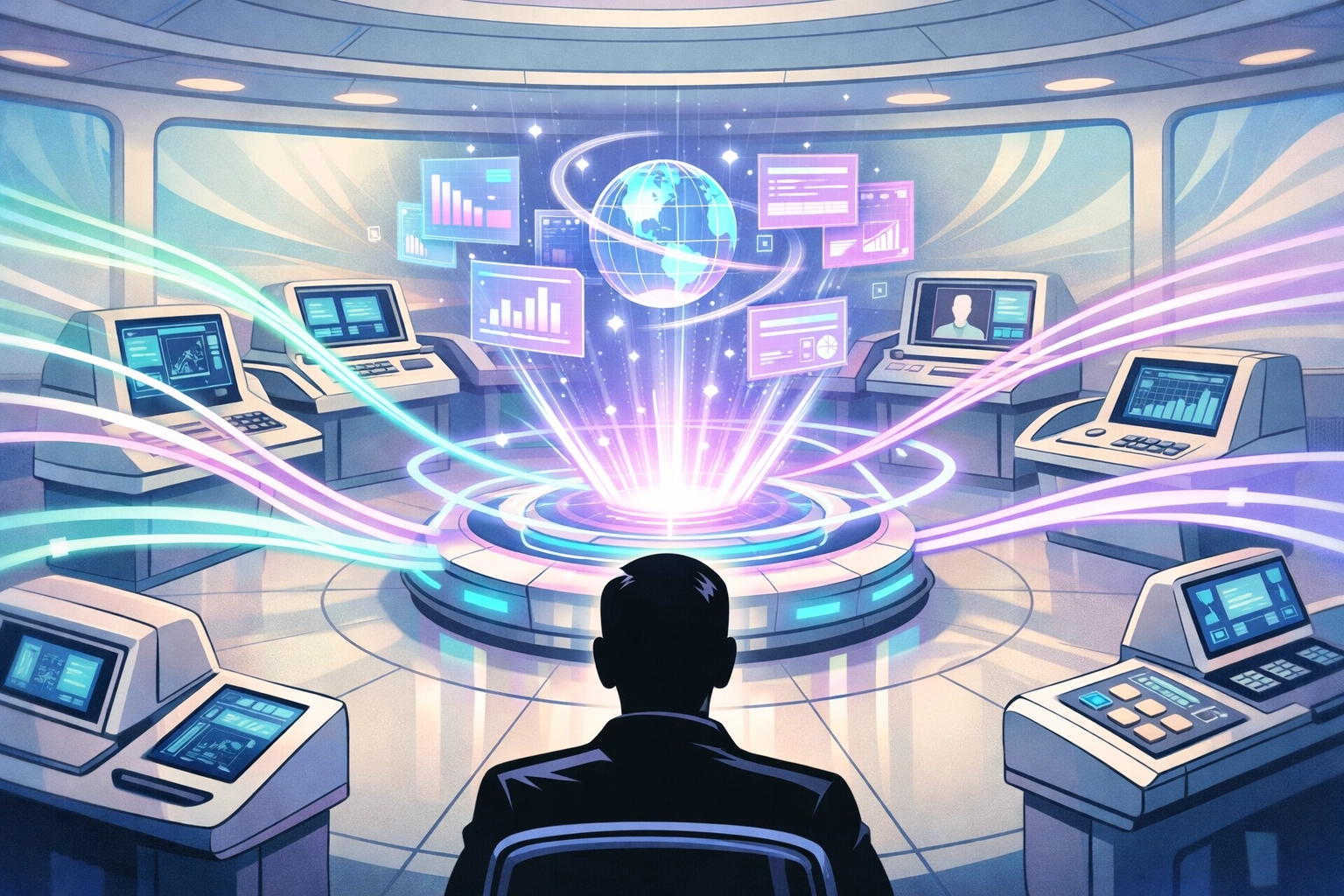
How Agentic AI Turns Orchestration Into a Growth Engine
Now here’s where it gets visionary.
The shift to revenue orchestration isn’t just about better workflows: it’s about Agentic AI taking over the decision-making that used to require human judgment.
Traditional marketing ops automation is rule-based. “If lead score hits 80, send to sales.” Simple. Predictable. Limited.
Agentic AI orchestration is contextual. It doesn’t just follow rules: it evaluates signals across your entire revenue ecosystem and decides what action to take based on real-time context. It looks at product usage data, intent signals, historical win patterns, account health, competitor activity, and sales capacity: then routes the opportunity to the right rep, with the right context, at the right time.
Here’s what that looks like in practice:
- A target account spikes in intent across three buying signals
- Agentic AI cross-references this with product usage patterns from similar accounts
- It identifies the highest-probability next action (demo request, case study share, executive intro)
- It updates Salesforce, alerts the account owner in Slack, personalizes the outreach sequence, and adjusts the ad targeting: all within minutes
- The rep doesn’t hunt for context. They just execute the play.
This is ai revenue operations in action. Not dashboards. Not alerts. Coordinated, intelligent execution that shortens the lag between signal and action from days to minutes.
The Real Outcomes Orchestration Delivers
Let’s talk results, because strategy without outcomes is just theory.
Orchestration-driven enterprise revops teams are seeing:
Faster signal-to-action cycles. Cut the lag from days to minutes between buyer intent and team response. When a hot account engages, your team knows instantly: and the system has already prepared the next move.
Cross-team alignment. Sales, marketing, and ops work from the same account view instead of operating in silos. No more “Did marketing pass this lead?” or “Why didn’t sales follow up?” The orchestration layer coordinates everyone automatically.
Pipeline predictability. Better forecasting through unified data and consistent activity tracking. When your CRM reflects real-time orchestrated activity instead of manually logged updates, your forecast accuracy improves immediately.
Reduced manual work. Automate research, routing, and prioritization tasks that consume hours of seller time weekly. Your reps stop being data archaeologists and start being revenue generators.
And here’s the kicker: this isn’t 12-month transformation work. When you build orchestration on clean data foundations and the right architecture, you see measurable velocity improvements in 30 days.

When Orchestration Becomes Non-Negotiable
So when do you actually need this?
Orchestration becomes critical when your enterprise hits these inflection points:
- 150–500 employees where coordination complexity explodes
- Complex multi-tool GTM environments with 10+ platforms generating disparate data
- CRM hygiene issues where manual data entry creates unreliable forecasts
- Unpredictable pipeline velocity where deals stall without clear next actions
If your teams are manually syncing priorities across functions, dealing with tool fatigue, or spending hours translating dashboards into action plans, orchestration will immediately improve velocity.
But here’s the truth: you don’t need to wait until the pain becomes unbearable. The teams winning in 2026 are the ones who recognized that reporting is a feature, not a strategy. They’re building orchestration layers now: before their competitors do.
The Bottom Line: Reporting Is Diagnostic, Orchestration Is Operational
Let me be direct: revenue reporting isn’t going away. You still need visibility, metrics, and performance tracking. But reporting alone is no longer enough.
The winning enterprise GTM motion in 2026 is this: unified data + intelligent orchestration + Agentic AI execution.
You need a revenue platform that doesn’t just show you what’s happening: it makes the right thing happen next. Automatically. Consistently. At scale.
That’s the shift from reactive to proactive. From insights to action. From tool fatigue to coordinated execution.
And that’s exactly what FusedLabs builds.
We transform fragmented data flows into unified orchestration engines that turn signals into actions in real time. Our clients see measurable GTM velocity improvements in 30 days: not because we add more dashboards, but because we eliminate the gap between knowing and doing.
If you want a deeper look at how this works in practice, here’s our approach to AI-driven revenue operations.
If you’re ready to stop drowning in dashboards and start orchestrating revenue like the enterprise growth machine you’re building, let’s talk. Your team deserves a GTM engine that works as fast as your market demands.
Because in 2026, the question isn’t whether you have the data. It’s whether your data is doing anything for you.

