
The Death of the Click: Why Your B2B Brand is Invisible in the Age of AI Search
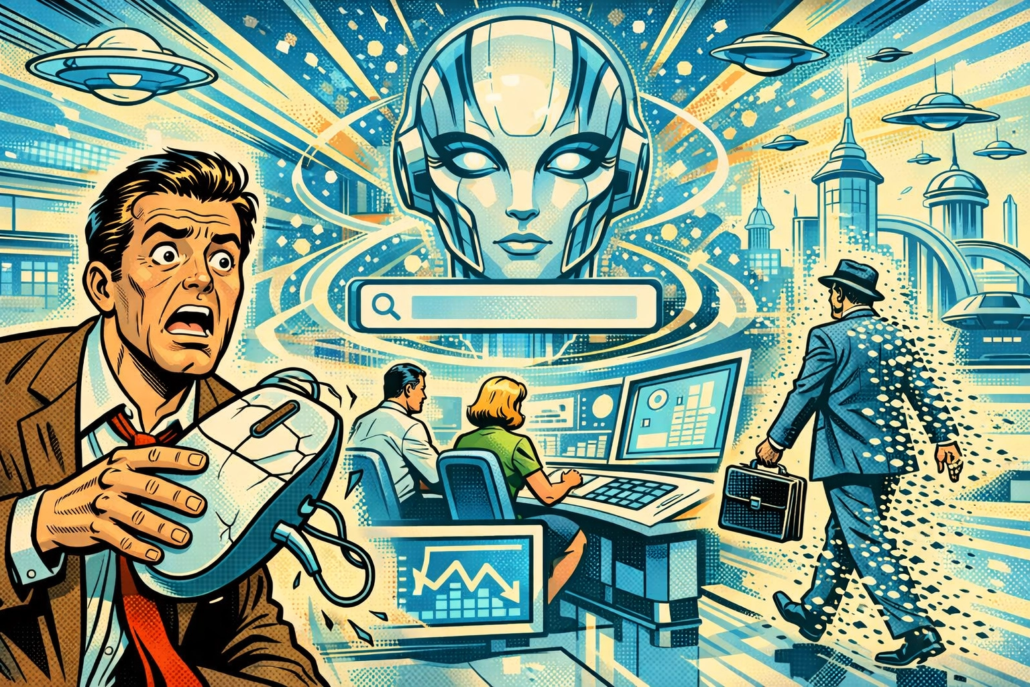
If you’re sitting in the VP of Marketing or RevOps chair today, Tuesday, March 17, 2026, and you’re still staring at your Google Search Console “clicks” as your primary North Star, I have some uncomfortable news for you: You are measuring a ghost.
The era of the “10 blue links” isn’t just fading, it’s effectively dead for the high-intent B2B buyer.
For the last decade, we built our kingdoms on the back of SEO. We optimized for keywords, we chased backlinks, and we prayed for that precious click that would land a prospect on our carefully crafted demo page. But the landscape has shifted underneath us. We’ve entered the age of Zero-Click Discovery, where the buyer journey begins and ends inside a conversational AI interface.
If your brand isn’t structured to be “digestible” by these engines, you’re not just ranking on page two. You’re invisible.
The Rise of the AI Shortlist
Think about how you researched your last enterprise software purchase. Did you spend three hours clicking through whitepapers and “Top 10” listicles? Probably not. You likely went to Perplexity, ChatGPT, or Gemini and asked: “Which RevOps platforms handle real-time product usage data sync for mid-market SaaS companies with a HubSpot/Salesforce hybrid stack?”
In less than three seconds, the AI gave you a curated shortlist of three vendors, summarized their pros and cons, and cited its sources.

This is the new reality. 25% of B2B buyers now use generative AI over traditional search for vendor research. That’s a quarter of your market that never even sees your website because the AI answered their question before they ever had to click.
In this world, “winning” doesn’t mean having the highest volume of blog posts. It means being the cited authority in the AI’s response. There is no “Page 2” in a ChatGPT answer. You are either in the response, or you don’t exist.
Why “Fluff” is Your Greatest Liability
For years, the B2B playbook was to “flood the zone” with content. We produced massive amounts of “What is [X]?” and “Benefits of [Y]” content to capture top-of-funnel traffic.
In 2026, AI engines have become incredibly efficient at identifying “fluff.” They are trained to seek out high-signal, high-authority information. When a generative engine crawls the web to build an answer for a prospect, it isn’t looking for keyword density. It’s looking for Entity Recognition and Structured Authority.
If your site is 90% generic advice and 10% product value, the AI will ignore you. It wants data-backed insights, technical documentation that proves you can solve the problem, and consistent signals across the web that your “entity” (your brand) is the undisputed expert in your niche.
This is where the shift from SEO to GEO (Generative Engine Optimization) happens. GEO isn’t about gaming an algorithm; it’s about architecting your brand’s information so an AI can confidently recommend you to a human.
The Architecture of Authority: Data as Your Best Marketer
At FusedLabs, we’ve spent years talking about the importance of AI-driven revenue operations. But usually, people think that’s just about internal efficiency.
Here’s the visionary take: Your internal data architecture is actually your most potent external marketing weapon.
AI search engines value structured data. They value how your product interacts with the world. When we help companies activate their product data, we aren’t just making their sales teams smarter; we are creating a digital footprint of authority that AI engines can “read.”
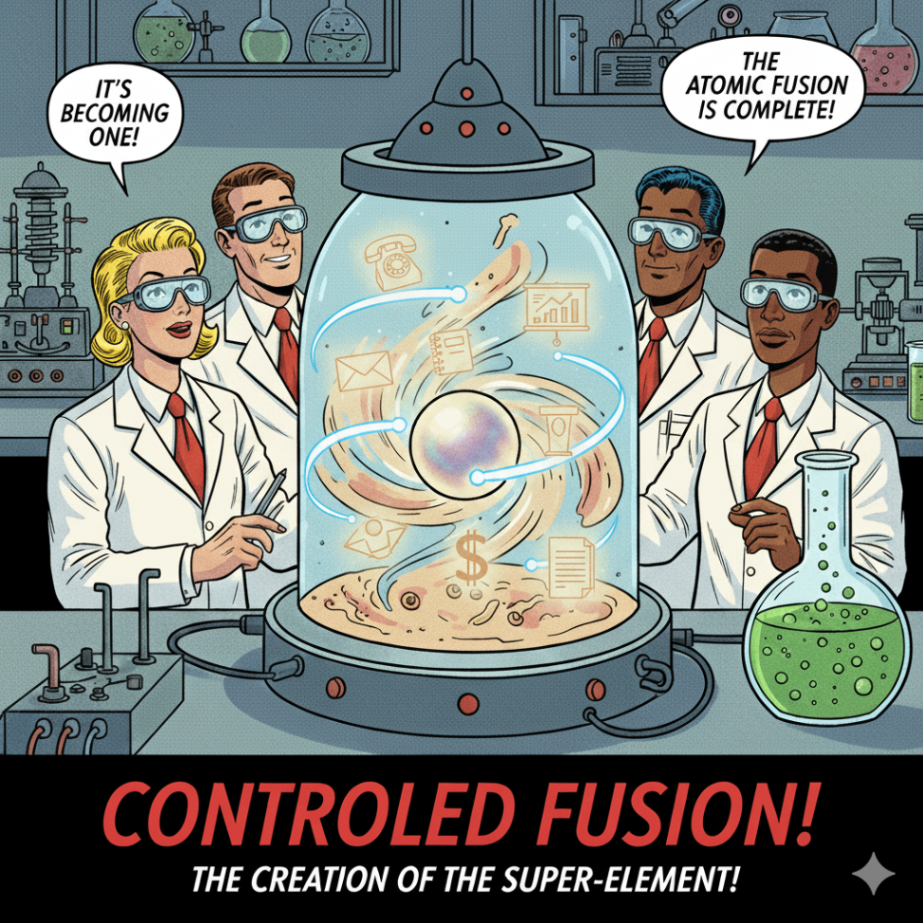
When your brand consistently demonstrates, through public-facing case studies, technical documentation, and structured data, that your product solves specific, complex problems (like lead-to-cash velocity or GTM orchestration), you become a “high-confidence entity” for AI.
If your data is siloed and your technical authority is hidden behind a login or a “request a demo” wall, you are starving the AI engines that your buyers are using to find you.
From Clicks to Inclusion: The New KPI
As a VP of RevOps or Marketing, your KPIs need to evolve. “Organic Traffic” is a vanity metric if that traffic isn’t leading to intent. Instead, you should be looking at Brand Share of Voice in Generative Summaries.
Are you being cited when a buyer asks about your category? If not, why?
- Is your technical data hidden? AI needs to understand the how of your product.
- Is your messaging fragmented? If your LinkedIn says one thing, your website says another, and your documentation says a third, the AI will label you “low confidence.”
- Are you missing “Proof of Life” signals? AI values third-party validation, analyst mentions, GitHub repos, and high-authority community discussions.
We’ve seen companies fail in their AI projects because they treat AI as a “layer” on top of bad data. The same applies to your visibility. You cannot “layer” GEO on top of a brand that lacks a solid data foundation.
The Strategy for the “Zero-Click” Era
So, how do you fix this before your pipeline dries up?
1. Optimize for Entities, Not Keywords
Stop writing for “RevOps tips.” Start writing for “Solving [Specific Technical Challenge] in [Specific Environment].” Help the AI understand exactly where your brand fits in the tech ecosystem.
2. Radical Transparency in Documentation
Your technical documentation and API schemas are no longer just for your customers. They are for the AI agents that are “auditing” your brand’s capabilities on behalf of buyers. Make them public, make them structured, and make them detailed.
3. Activate Your Product Signals
Use your product’s real-world impact as your content engine. When you can talk specifically about how your RevOps autopilot reduced churn by 14% through automated triggers, you provide a high-signal “fact” that AI engines love to cite.
4. Build a Coherent Data Bridge
This is the core of what we do at FusedLabs. By aligning your product data with your GTM stack, you create a single source of truth. This internal coherence eventually bleeds into your external presence. A company that is operationally aligned is a company that speaks with a single, authoritative voice: and AI engines crave authority.

The Vision: A Future Without “Search”
Imagine a world, maybe only 18 months away, where “searching” is replaced entirely by “matching.” A buyer’s AI agent talks to your brand’s digital twin. They exchange data on requirements, pricing, and technical fit.
If your brand is a black box: invisible, un-structured, and buried under layers of marketing fluff: that match will never happen.
The “Death of the Click” isn’t a threat; it’s an opportunity for the brands that actually have the substance to back up their claims. It’s an opportunity for VPs who are willing to move away from legacy SEO metrics and toward a future of AI-driven revenue operations.
Is your brand ready to be found? Or are you just waiting for a click that’s never coming?
If you’re wondering how to bridge the gap between your raw data and your GTM visibility, let’s talk. You can find more about my perspective on our RevOps AI Insights page or reach out to me, Mihnea Stoian, directly.
The future is zero-click. Don’t let your brand stay invisible.
