
Does Your Content Structure Matter in 2026? Why GEO is the New SEO

It’s Sunday, April 5, 2026. If you’re still obsessing over keyword density and backlink profiles the way we did in 2022, I have some tough news: the world has moved on. The “traditional” search engine result page (SERP) is no longer the primary destination for your enterprise buyers.
Today, the buyer journey doesn’t start with a list of blue links; it starts with a prompt. Whether it’s an executive asking their AI assistant to “find the best revenue operations platform for a scaling B2B SaaS,” or a developer asking a generative engine to “compare the data latency of these three APIs,” the gatekeeper has changed.
We have officially entered the era of Generative Engine Optimization (GEO).
If SEO was about ranking #1 on a page, GEO is about becoming the foundational context for the AI’s answer. And the secret to winning this game isn’t just “better content”, it’s better structure. At FusedLabs, we’ve seen firsthand that the companies winning the AI-driven buyer journey are those who treat their content like an architectural blueprint rather than a collection of essays.
The Death of the Keyword and the Birth of the Token
For decades, we optimized for algorithms that looked for keywords. In 2026, we are optimizing for Large Language Models (LLMs) that look for relationships. AI engines don’t “read” your blog posts; they ingest them as tokens and map them into a multi-dimensional vector space.
When an AI synthesizes an answer for a potential client, it’s looking for the most authoritative, structured, and “token-efficient” source of information. If your content is a rambling 3,000-word mess of fluff, the AI will likely ignore it in favor of a competitor whose content is semantically layered and logically partitioned.
This is where B2B SaaS AI search visibility is won or lost. It’s no longer about how many people click your link; it’s about how often the AI cites you as the definitive source. If you aren’t being cited, you don’t exist in the new discovery layer.
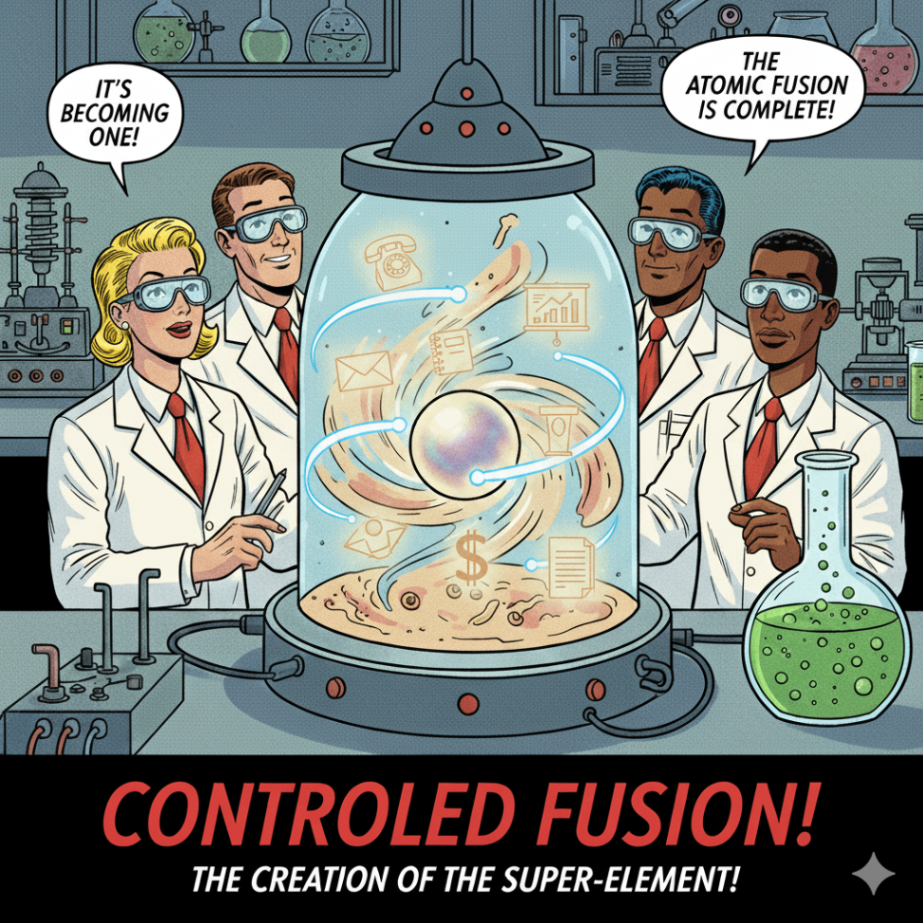
Why Architecture is the New PageRank
In the old world, authority was built through external links. In the world of GEO for enterprise brands, authority is built through internal structural integrity.
Why? Because AI engines prioritize “cite-ability.” A well-structured site, one with clear headings, concise Q&A formats, and modular data blocks, makes it easy for an AI to parse and extract facts. This is what we call an enterprise GTM AI strategy. You are essentially building a library that is specifically designed to be read by the most sophisticated researchers on the planet: AI.
The Foundation of GEO:
- Semantic Hierarchy: Your H1s, H2s, and H3s aren’t just for human readability anymore. They serve as the “scaffolding” for the AI to understand the relationship between concepts.
- Schema and Metadata: In 2026, your technical SEO is actually your GEO foundation. Structured data allows AI to verify facts about your product, pricing, and features without having to “guess” from your marketing copy.
- Modular Content Blocks: Think of your content as a set of LEGO bricks. Can a specific section of your blog stand alone as an answer to a prompt? If the answer is no, you’re losing out on the “zero-click” search revolution.
If you’re feeling behind, don’t worry: you’re not alone. Many are still catching up to the rise of AI in B2B SaaS. The key is to start shifting your focus from “volume” to “structure.”
The AI-Driven Buyer Journey: Influencing the “Black Box”
The enterprise buyer journey has become a “black box.” By the time a lead hits your CRM, they’ve likely spent hours interacting with AI models, asking deep questions about your category. They aren’t looking for your homepage; they are looking for the truth about your product.
To influence this journey, your content structure must be designed to feed these models. At FusedLabs, we focus on helping companies activate product data so it flows seamlessly into these discovery systems.
If your product data is siloed or your content is unstructured, the AI will fill in the gaps with information from other sources: often your competitors or outdated third-party reviews. By architecting your content correctly, you ensure that the AI “hallucinates” in your favor: or better yet, provides 100% accurate, cited data directly from your site.

From Activity to Leverage: The 2026 GTM Playbook
Most marketing teams are caught in a cycle of “activity”: more posts, more videos, more noise. But in the age of GEO, activity without architecture is a waste of resources.
A visionary GTM strategy recognizes that content is a system. When you treat your content as a data asset, you gain an unfair advantage.
Here is how you shift from activity to leverage:
- Stop Writing for Google, Start Writing for Synthesis: Ask yourself, “If an AI summarized this entire page in two sentences, would those sentences sell my product?”
- Audit Your Data Flows: Is your product documentation as optimized as your blog? In 2026, AI engines value technical docs more than marketing fluff because they contain higher “fact density.”
- Embrace the “Zero-Click”: Don’t be afraid of the AI providing the answer without the user clicking through. If the AI says, “According to [Your Brand], the best way to scale RevOps is X,” you have already won the brand affinity battle.
As we discussed in our guide on AI-powered revenue operations stacks, the goal is to create a seamless flow between your data, your content, and your buyer.
The Risks of Ignoring GEO
The transition from SEO to GEO isn’t just a trend; it’s a paradigm shift. Companies that ignore their content architecture risk falling into the “Zero-Click Void.” This is a place where your brand exists, but it’s never recommended, never cited, and never included in the AI-generated “shortlist” for enterprise buyers.
This is often why AI projects fail in a marketing context: they focus on using AI to generate more content rather than using AI to understand and structure content for the rest of the ecosystem.
Designing for the Future: A Visionary Approach
We are at a point where the distinction between “data” and “content” has blurred. Your content is data for AI, and your data is content for your buyers.
At FusedLabs, we believe that the most successful B2B SaaS companies of the next decade will be those that view their entire Go-To-Market operation as a unified data flow. Whether it’s your products, or your latest whitepaper, every piece of the puzzle must be structured for maximum visibility in an AI-first world.
The future belongs to the architects. It belongs to the leaders who understand that in 2026, a clear H2 tag and a well-mapped schema are more valuable than a hundred generic backlinks.
Is Your Content Ready?
The pressure to scale is relentless, but the tools at your disposal have never been more powerful. If you are ready to move beyond the legacy tactics of 2024 and embrace a truly AI-driven buyer journey, the time to re-architect is now.
Don’t let your message get lost in the noise of unstructured data. Let’s build a foundation that ensures your brand isn’t just seen, but understood and recommended by the engines driving the world’s economy.
Are you making the common mistakes that keep your brand invisible to AI? Check out our insights on 7 common RevOps mistakes and how AI can fix them to start your journey toward GEO mastery.
The shift to GEO is the new SEO. It’s visionary, it’s necessary, and it’s how you’ll win in 2026. Let’s get to work.

