
Agentic AI Needs Pure Data: How to Automate Hygiene Without Losing Your Mind

You’ve finally got your AI agents up and running. They’re supposed to route leads, update CRM records, personalize outreach, and maybe even predict which deals are going to close. But instead of GTM magic, you’re getting duplicate contacts, conflicting account data, and AI suggestions that make zero sense.
Here’s the brutal truth: Your AI agents are only as smart as the data you feed them. And if that data is messy, duplicated, or inconsistent? Your expensive Agentic AI setup just became a very fast way to make very bad decisions.
The good news? You don’t need to hire an army of data analysts to fix this. You need to automate data hygiene in a way that prevents the mess before it happens: and makes sure your AI agents always have the pure, structured data they need to actually deliver on their promise.
Why “Pure Data” Isn’t Just a Buzzword Anymore
Traditional AI tools could get by with a bit of messiness. Run a batch process, clean up errors later, no big deal. But Agentic AI is different: these systems make autonomous decisions in real time, continuously learning and acting on the data they see.
When your AI agent decides to route a $250K enterprise lead to the wrong sales rep because of a duplicate account record, that’s not a minor inconvenience. That’s revenue walking out the door. Unlike conventional automation that follows fixed rules, Agentic AI reasons, adapts, and collaborates with other agents. One bad data point cascades across multiple decisions.

I’ve seen firsthand how enterprises get excited about deploying AI agents, only to realize their CRM is a graveyard of duplicates, their product usage data doesn’t sync properly, and nobody’s quite sure which “customer name” field is the source of truth. You can’t reason over chaos: and that’s exactly what you’re asking your AI to do if your data foundation isn’t solid.
The Hidden Cost of Dirty Data in the Age of AI
Here’s what happens when your data hygiene is an afterthought:
Your AI agents hallucinate more. Without clean, contextual data, agents fill in the gaps with guesses. They confidently route leads to the wrong segment, recommend products customers already own, or surface insights based on outdated information.
Your GTM team loses trust. When your marketing ops automation sends the same email to a prospect three times because of duplicate records, or your AI-powered dashboard shows conflicting revenue numbers, your team stops believing in the system. They go back to spreadsheets and manual workarounds.
Compliance risks skyrocket. If your agents can’t distinguish between different data sources or don’t respect privacy boundaries, you’re one bad decision away from a regulatory nightmare. GDPR fines don’t care that “the AI made a mistake.”
You waste money at scale. Agentic AI is expensive to run. Every query, every decision, every action costs tokens and compute. When your agents are spinning their wheels on duplicate data or re-processing the same messy records, you’re literally burning budget on garbage.
The organizations winning with AI revenue operations aren’t the ones with the most sophisticated models: they’re the ones with the cleanest data ecosystems.
How to Automate Data Hygiene Without a 6-Month Project
You don’t need to pause your entire GTM operation to fix this. You need to build hygiene into the flow, not as a cleanup project you do “eventually.” Here’s how to architect it properly:
1. Embed Governance Directly Into Your Data Workflows
Stop treating data governance as a separate initiative that slows everything down. Modern Agentic AI needs governance that enables speed, not creates bottlenecks.
This means automated quality rules that run in real-time as data flows from your product into your GTM stack. When a new user signs up, your system should immediately check: Does this email already exist? Does this company match an existing account? Is this person already in a nurture sequence?
Role-specific access is critical here: your AI agents should only see the data they need for their specific job. Your lead routing agent doesn’t need access to billing data, and your churn prediction model doesn’t need raw email content. Automated lineage and cataloging ensures agents understand where data came from and how reliable it is.

2. Stop Duplicates Before They Happen
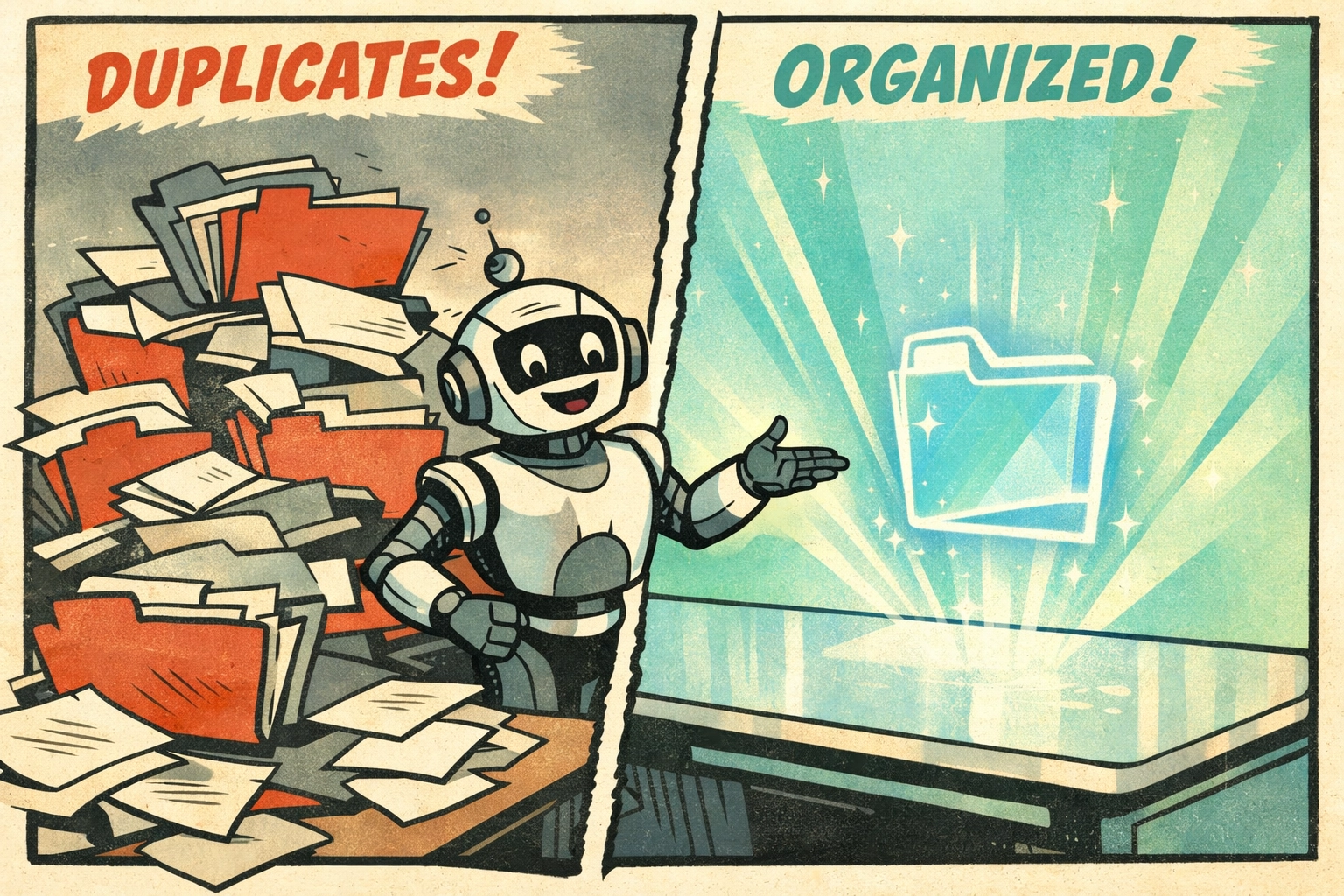
The best way to deal with duplicate data? Don’t create it in the first place.
Set up matching rules at the point of entry. When data flows from your product into your CRM, run it through automated deduplication logic before it ever creates a new record. Use fuzzy matching for company names (because “Acme Corp,” “Acme Corporation,” and “ACME Corp.” are all the same company), normalize email domains, and standardize formatting.
This isn’t just about preventing exact duplicates: it’s about recognizing when “John Smith at Acme” and “J. Smith at Acme Corp” are the same person, even when the data doesn’t match character-for-character.
3. Implement Built-In Testing and Validation
Your data transformation layer needs built-in quality checks. Tools like dbt let you transform raw data into analytics-ready models with documentation, testing, and lineage baked in from day one.
But for Agentic AI, you need to go further: validate AI responses before agents act on them. Set up structured evaluation workflows that compare AI outputs against ground truth data, triggering alerts when accuracy drops below your threshold.
If your lead scoring AI suddenly starts assigning all enterprise deals a score of “3” because it’s reading a null value wrong, you want to catch that before your sales team wonders why their pipeline disappeared.
4. Ensure Data Freshness Matches Use-Case Requirements
Different AI agents have different freshness needs. Your customer service agent needs real-time order status updates. Your quarterly planning agent can work with week-old aggregates.
Match your data pipeline architecture to these requirements. Real-time streaming for operational use cases, scheduled batch processing for analytical ones. And always feed contextual information: lineage, source, timestamps: into your semantic layer so agents understand not just what the data says, but how current and reliable it is.
5. Build a Semantic Layer Your Agents Can Actually Use
This is where a lot of enterprises get stuck. They have data scattered across Salesforce, HubSpot, product databases, support tools, and billing systems. Your AI agents need a unified view without you physically centralizing everything (because that’s a multi-year nightmare).
A semantic layer provides unified definitions of business terms across systems. When your AI asks “Who are our enterprise customers?”, it gets a comprehensive answer that pulls from CRM, product usage, billing, and support: all without you building custom integrations for every possible data combination.
This is the difference between an AI agent that can actually help you and one that just throws errors because it can’t reconcile conflicting definitions of “active user.”
How FusedLabs Architects the Flow From App Data to GTM Stack
At FusedLabs, we’ve seen this movie before: promising AI implementation, messy data foundation, disappointing results. That’s why our approach focuses on architecting the entire data flow before we even talk about which AI agents to deploy.
We start by mapping how data moves from your product to your GTM stack: identifying where duplicates get created, where data quality degrades, and where governance gaps exist. Then we build automated hygiene processes directly into that flow, using the tools you already have (or integrating new ones where you actually need them).
The result? Within 30 days, you see measurably cleaner data and AI agents that actually make sense. By 90 days, your entire enterprise GTM operation runs on a foundation of pure, governed, real-time data that powers reliable autonomous decisions.
We don’t just hand you a data quality report and wish you luck. We embed the automation, train your team, and make sure your AI agents have the clean fuel they need to deliver on their promise.
The Bottom Line
Agentic AI is only transformational if the data foundation is solid. You can have the most sophisticated models in the world, but if they’re reasoning over duplicate records and inconsistent definitions, you’re just automating chaos.
The organizations leading in AI revenue operations aren’t those with the fanciest algorithms: they’re the ones with the most robust, accessible, and well-governed data ecosystems. They’ve automated hygiene so thoroughly that clean data is the default, not an exception.
You can either spend the next year manually cleaning up data quality issues as they arise, or you can architect a system where pure data flows automatically from product to GTM stack, ready for your AI agents to turn into revenue.
Ready to build a data foundation that actually supports Agentic AI? Let’s talk about how FusedLabs can help you automate hygiene, eliminate duplicates, and transform your GTM operations in 90 days. Visit FusedLabs to learn more about our approach to AI revenue operations.

