
Autonomous GTM Agents vs Traditional Enterprise RevOps: Which Is Better For Your B2B SaaS in 2026?
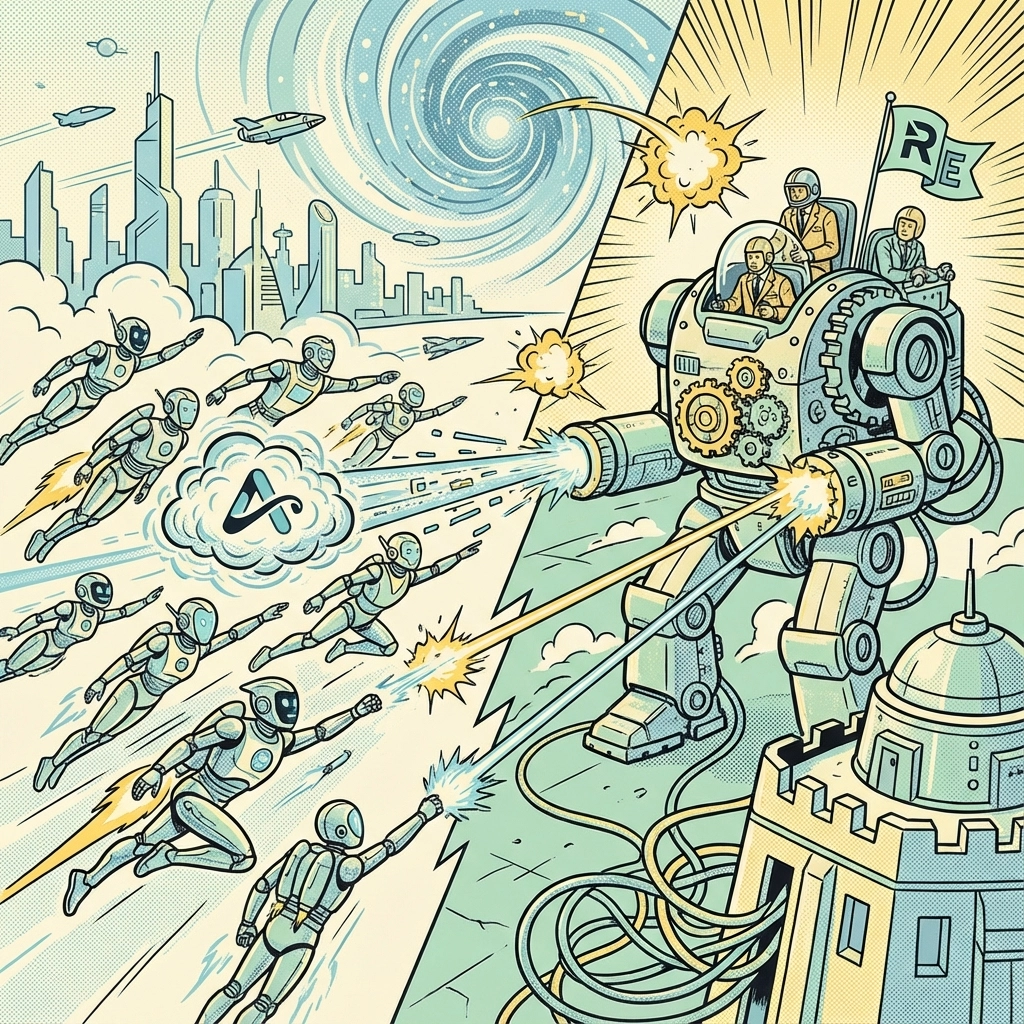
Your RevOps team is drowning in manual handoffs. Your analytics lag behind market reality by weeks. Your data sits trapped in silos while deals slip through cracks. Sound familiar?
If you're running enterprise marketing operations in 2026, you're facing a fundamental choice: double down on traditional RevOps or leap into autonomous GTM agents. The stakes are high: Gartner predicts that 75% of RevOps tasks will be executed by AI agents by 2028. But which approach actually delivers results for your B2B SaaS?
Let me break down what I've seen work (and what doesn't) across dozens of enterprise implementations.
The Real Problem: Manual Coordination Is Breaking Down
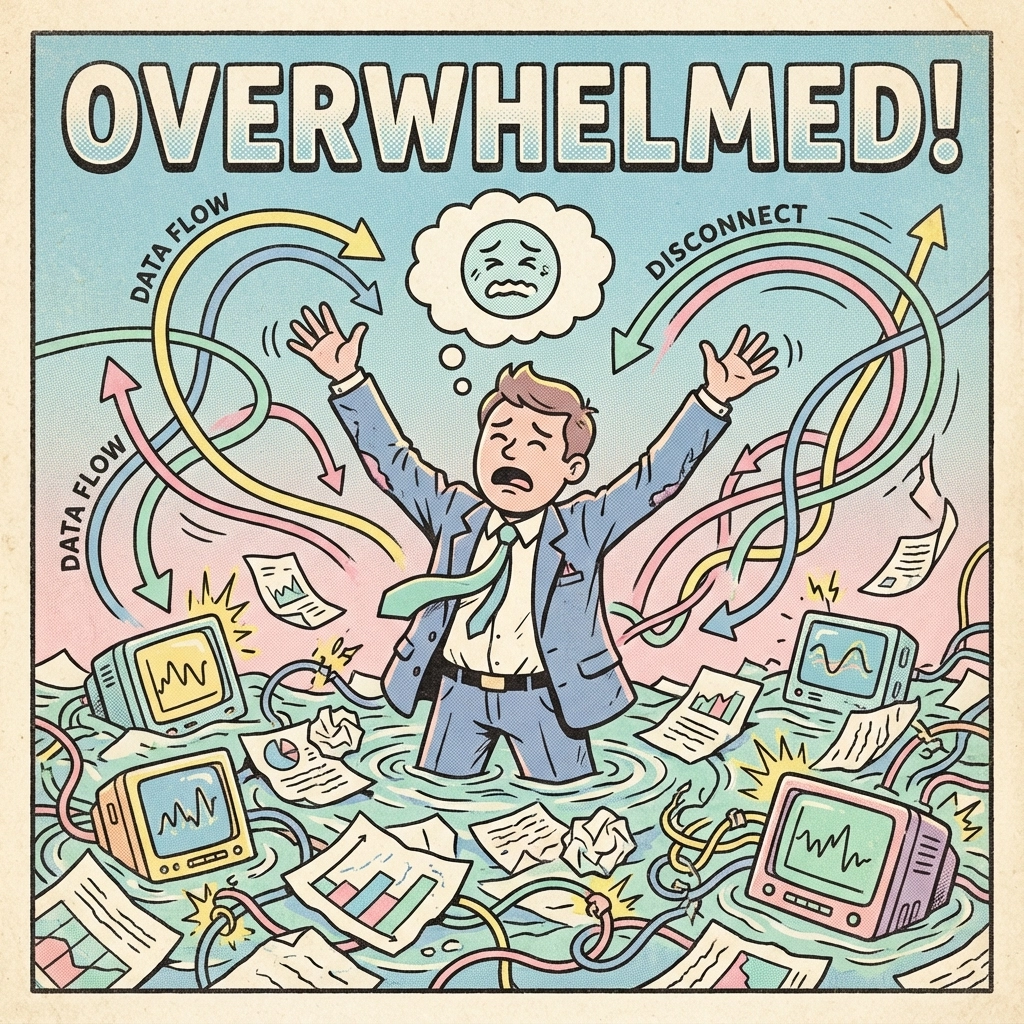
Traditional enterprise RevOps teams have become the human glue holding GTM systems together. You're manually updating pipelines, interpreting deal health, logging activities, managing handoffs between sales and marketing, and piecing together insights from scattered platforms.
Here's the bottleneck: 75% of RevOps professionals cite data inconsistencies as their biggest challenge. While you're cleaning data and managing integrations, opportunities are moving through your pipeline without proper orchestration.
Your marketing ops team knows a high-value prospect visited your pricing page five times this week, but that insight doesn't automatically trigger the right sales sequence. Your sales team sees pipeline health declining, but connecting that to specific campaign performance requires manual analysis across multiple dashboards.
This manual coordination works until it doesn't. At scale, it becomes impossible to maintain.
Traditional Enterprise RevOps: The Proven Foundation
What Traditional RevOps Does Well
Traditional RevOps delivers documented, repeatable results. Companies implementing structured revenue operations achieve 100-200% increases in marketing ROI and 10-20% improvements in sales productivity. Tools like Gong report up to 481% ROI with less than 6-month payback, along with 50% reduction in time to productivity and 27% increase in revenue per rep.
The approach is systematic: clean your data, standardize processes, implement solid reporting, optimize based on learnings. Your team builds proven frameworks like lead routing rules, qualification standards, and forecast reviews that work across existing tech stacks without requiring architectural upheaval.
This creates organizational confidence. The playbook is established. The challenges are known. You can hire RevOps professionals who understand these frameworks. You're implementing what's worked at thousands of scale-ups, not betting on emerging technology.
Where Traditional RevOps Hits Walls
The constraint becomes apparent as you scale: analysis tends to be reactive rather than prescriptive. You can tell what happened in the past, but determining what to do next still requires human judgment and manual effort.
Your RevOps team spends significant time on data stewardship instead of strategic insights. When your MQL volume doubles, you need more analysts to maintain the same level of pipeline visibility and optimization. Growth requires linear increases in RevOps headcount to maintain effectiveness.
Traditional RevOps allocates approximately 6% of GTM headcount to revenue operations, but those team members are often stretched across tactical execution rather than strategic optimization.
Autonomous GTM Agents: The Future-Forward Approach

How Autonomous Agents Change the Game
Autonomous GTM agents eliminate manual coordination entirely. Instead of analysts spending time on data entry and activity logging, the system automatically detects stale opportunities, missing contacts, risk trends, and slipping deals: then triggers the correct next action across your entire tech stack.
The architectural advantage matters here. Rather than managing point solutions connected through integrations, AI-native stacks flow through a unified intelligent layer: CRM + Marketing + Support → AI Engine → Insights & Automations. Everything runs through a system that continuously learns and adapts.
One documented case showed MQLs increase by 54% and sales cycles shorten by 12-20% through AI-driven segmentation delivering more relevant messaging. Because workflows are autonomous, organizations handle significantly more volume without linearly increasing team size.
The Investment and Transformation Required
AI-native approaches require fundamental architectural decisions early. You're not adding tools to existing systems; you're rethinking how data flows through your entire GTM engine. This means higher upfront complexity, typically requiring 3-6 months to payback ROI, though 3-year ROI can reach 300-481%.
Your team composition shifts significantly. AI-native companies allocate approximately 9% of their GTM headcount to RevOps, but these aren't traditional RevOps roles. You need AI fluency, data governance expertise, and enablement specialization that traditional teams haven't had to develop.
The approach also demands organizational readiness to act on recommendations quickly. Instead of quarterly planning cycles, AI-native stacks operate on monthly re-forecasting with continuous scenario planning.
Head-to-Head: Which Delivers Better Results?

ROI and Timeline Comparison
Traditional RevOps delivers proven 6-month payback with 100-200% marketing ROI improvements. Autonomous agents require 3-6 month payback but achieve 300-481% ROI over three years. The question is whether you can afford the upfront investment and organizational change.
Scalability Differences
Traditional RevOps scales linearly with team growth. Autonomous agents scale exponentially: handling more volume without proportional increases in headcount. If you're planning aggressive growth, autonomous systems provide competitive advantages that traditional approaches can't match.
Decision-Making Speed
Traditional RevOps is analytical: telling you what happened so you can decide what to do. Autonomous agents are prescriptive: automatically executing optimizations based on real-time data patterns. The speed difference becomes significant at enterprise scale.
Your Strategic Decision Framework
If You're Series A or Early Series B
Start with traditional RevOps fundamentals implemented through vendor-hosted AI tools integrated into a unified platform. You don't have the engineering resources or revenue scale to justify building proprietary AI systems.
Focus on establishing strong data foundation and automating one high-impact workflow: typically lead routing or qualification. Your priority is proving your GTM model works before optimizing execution velocity.
If You're Series B or Series B+
Transition toward a unified RevOps platform with embedded AI capabilities. Implement clear RevOps ownership of AI strategy and begin experimenting with autonomous workflows in limited scope: perhaps autonomous lead enrichment or signal-based pipeline orchestration.
This positions you for efficient scaling through Series C. Move from approximately 6% to 9% of GTM headcount allocated to RevOps and invest in upskilling on AI governance and orchestration.
If You're Series C and Beyond
Adopt fully agentic systems with AI-driven revenue action orchestration. By this stage, your data architecture is mature, your GTM processes are standardized, and your team has the skills to manage autonomous workflows at scale.
Your RevOps team shifts from execution to strategy: building relationships with sales and marketing leadership, guiding AI governance, and driving customer success initiatives while agents handle complex coordination.
The Bottom Line: Timing Matters More Than Technology
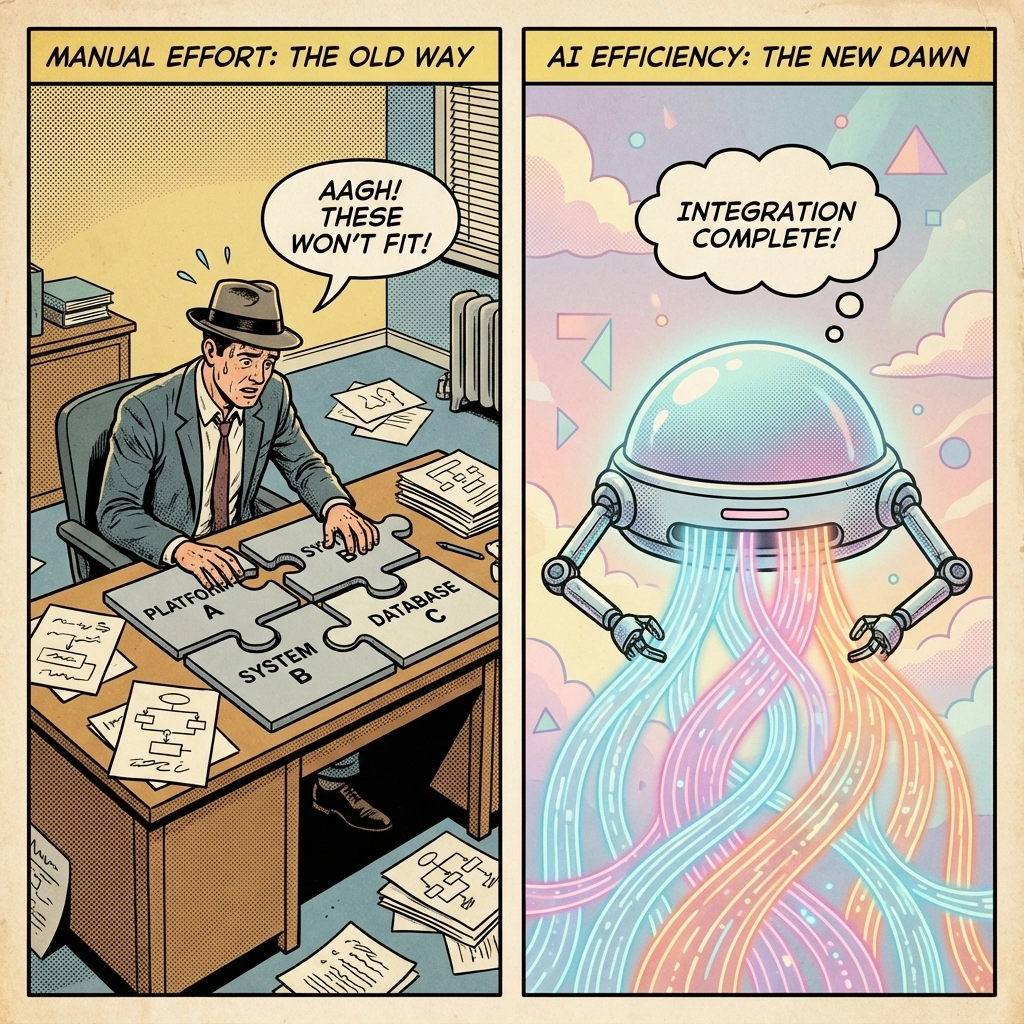
The better approach depends on where you are right now. If your GTM execution is fragmented, your data inconsistent, and your processes manual, traditional RevOps solves your immediate problem: often in under 6 months with proven 100-200% ROI improvements.
But if you're already mature in RevOps execution and looking for competitive advantage at scale, autonomous agents offer prescriptive decision-making and scalability that traditional approaches can't match at high volume.
The most successful strategy treats this as evolution rather than revolution: Build a strong traditional RevOps foundation first, integrate vendor-hosted AI capabilities as you scale, and transition toward fully autonomous systems once your data quality, process standardization, and team skills support that complexity.
By 2028, when 75% of RevOps tasks will be agent-driven, you'll be positioned to execute that transition efficiently rather than scrambling to catch up. The question isn't whether to adopt AI in revenue operations: it's when and how to make the transition without disrupting your current growth trajectory.
Ready to assess where your RevOps stands and map your next evolution? Contact our team for a strategic review of your current architecture and growth stage recommendations.

