
Calibrating for Valuation: How Investors Read the "Gears" of Your Revenue Engine

As a VC advisor, I've sat through many pitches. Founders love to show you the gleaming face of their watch, the beautiful UI, the impressive logo, the big-name clients. But savvy investors aren't just buying the face; they're investing in the mechanism inside. They take out their loupe and examine the gears.
That mechanism is your revenue engine, and its quality, predictability, and scalability are what determine your valuation. A mature Revenue Operations function is the difference between a cheap knockoff and a Patek Philippe. Here's what we're looking for when we peek inside.
The Quality of the Materials: Data Integrity
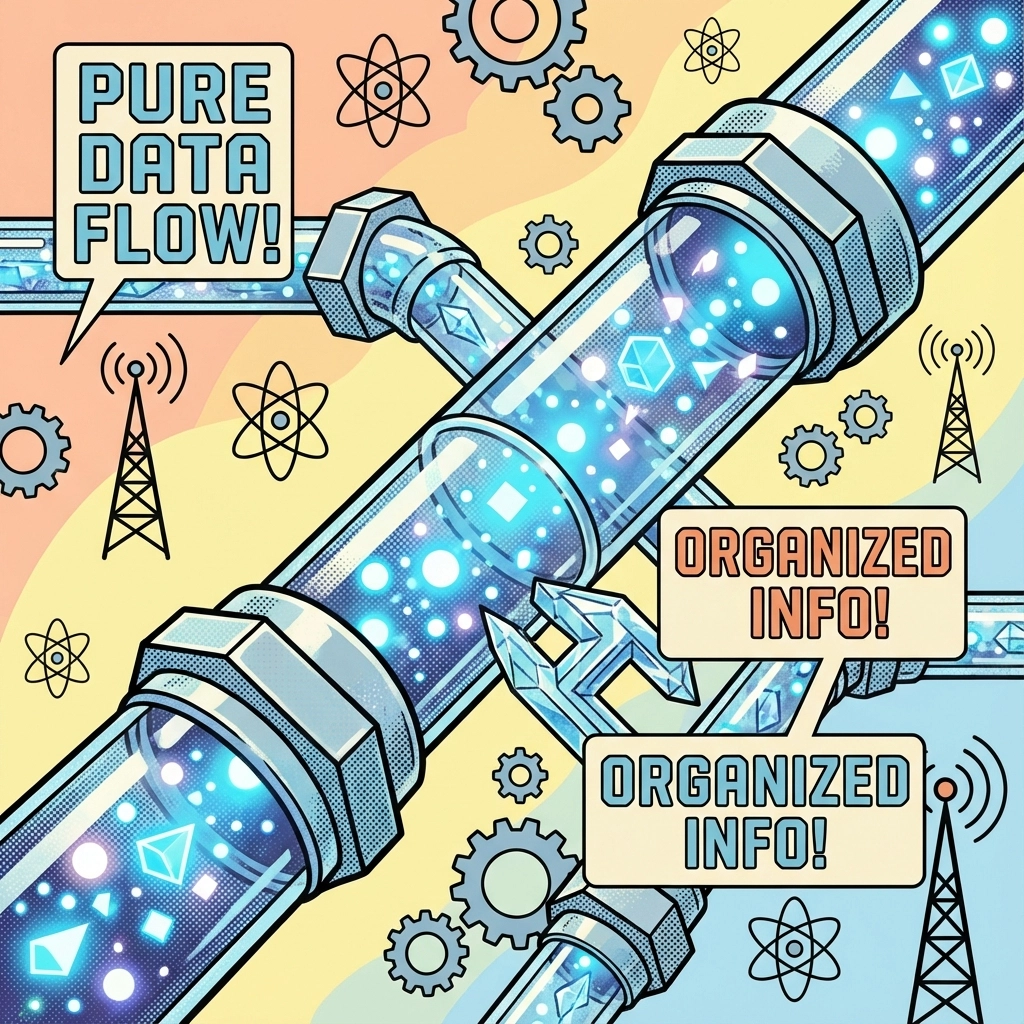
The first thing to scrutinize is the quality of your data. If your CRM is a mess of duplicate contacts, incomplete fields, and inconsistent stage definitions, it's like seeing a watch made with soft, jagged metal. It tells us the entire machine is unreliable.
Investor Question: Can you show me your dashboard for pipeline velocity, conversion rates by stage, and customer acquisition cost (CAC)? If you say, "Let me export some data and get back to you," we know your gears are rusty.
We want to see a real-time, trusted dashboard you run your business on every day. Not the sanitized version you pulled together for fundraising, the one with coffee stains on the printout that sits on your desk during Monday morning pipeline reviews.
Here's what pristine data integrity looks like to an investor:
- Consistent lead scoring that actually predicts conversion
- Clean attribution models that trace revenue back to specific marketing touches
- Unified customer definitions across sales, marketing, and success teams
- Real-time pipeline health with accurate stage progression and velocity metrics
When your data is this clean, it signals something profound: you understand your business at a granular level. You're not guessing about what drives growth, you're measuring it, optimizing it, and scaling it systematically.
Poor data integrity, on the other hand, creates a cascade of problems. Your sales team can't prioritize leads effectively. Your marketing team can't optimize spend across channels. Your customer success team can't predict churn risk. Most importantly, you can't give investors the confidence they need to write a check.
The Precision of the Assembly: Process & Alignment
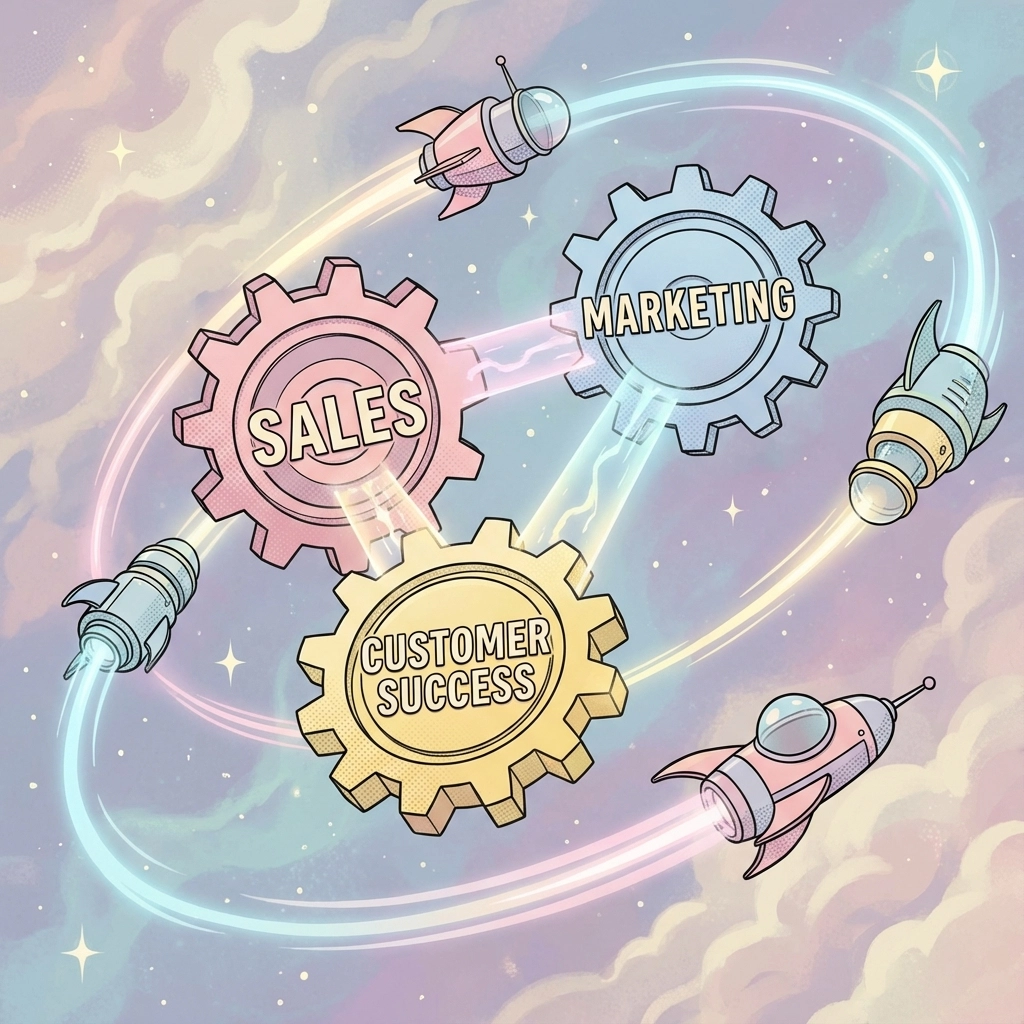
Next, we look at how the parts fit together. We don't just ask about your sales numbers; we ask about your sales process.
Investor Question: Walk me through your customer journey, from the first marketing touch to a renewal. Where are the handoffs? How are they managed? What are your conversion rates between each major stage?
A crisp, confident answer backed by data shows a well-oiled machine. A hesitant answer with vague descriptions of inter-team dynamics signals a high-friction, leaky funnel that will break under the pressure of scaling.
Think of it this way: a luxury watch has hundreds of components that must work in perfect harmony. Your revenue engine has just as many moving parts, lead generation, qualification, nurturing, demo scheduling, proposal creation, contract negotiation, onboarding, expansion, renewal. Each handoff is a potential point of failure.
The best revenue operations teams create what I call "frictionless handoffs." They've mapped every touchpoint, defined clear responsibilities, and built systems that automate the transitions. When a lead hits a certain score, it automatically routes to sales. When a deal reaches a specific stage, customer success gets looped in. When a renewal approaches, the entire account team receives coordinated alerts.
Here's what precise process alignment looks like:
- Defined handoff criteria between marketing and sales with clear SLAs
- Standardized qualification frameworks (BANT, MEDDIC, etc.) consistently applied
- Automated workflows that reduce manual tasks and human error
- Cross-team visibility into pipeline health and account status
- Consistent messaging throughout the entire customer journey
When processes are this aligned, you can scale predictably. Add more marketing spend, get more qualified leads. Add more salespeople, close more deals. Add more customer success managers, expand more accounts. The gears turn smoothly at any speed.
The Predictability of the Ticking: Forecasting
Ultimately, a watch's primary function is to be a predictable measure of time. A revenue engine's primary function is to be a predictable source of growth. Your ability to forecast accurately is the ultimate test of your operational maturity.
Investor Question: What was your forecast at the beginning of last quarter, and where did you land? What were the primary drivers of the variance?
A founder who can answer this with precision, "We forecasted $500k, landed at $485k, and the delta was due to a 5-day slip in our average sales cycle for deals over $50k", is infinitely more credible than one who says, "Yeah, we were pretty close!"
Accurate forecasting reveals several things about your revenue engine:
You understand your conversion mechanics. You know that 100 marketing qualified leads typically convert to 40 sales qualified leads, which convert to 20 opportunities, which convert to 8 closed deals worth an average of $25k each. When these ratios shift, you notice immediately and can explain why.
You track leading indicators, not just lagging ones. Revenue is what happened last quarter. Pipeline velocity, lead volume, and conversion rates are what will happen next quarter. Great revenue operations teams build forecast models based on these leading indicators, giving them 90+ days of visibility into future performance.
You can isolate variables that impact growth. Maybe your win rate drops when deals take longer than 60 days to close. Maybe prospects from certain marketing channels convert at higher rates. Maybe enterprise deals have different seasonal patterns than SMB deals. This granular understanding lets you optimize each component of your revenue engine.
The gold standard for forecasting accuracy is landing within 5% of your prediction, quarter after quarter. When you can do this consistently, investors see a business they can model, project, and value with confidence. You've essentially built a revenue machine that compounds predictably: exactly what growth-stage investors want to fund.
The RevOps Advantage: Beyond the Basics
Here's where many founders miss the mark: they think revenue operations is just about CRM hygiene and sales reporting. But modern RevOps is actually about building intelligent systems that learn and optimize over time.
The most sophisticated revenue engines I evaluate incorporate:
AI-powered lead scoring that gets smarter with every conversion
Predictive analytics that identify expansion and churn risks before they materialize
Dynamic pricing models that optimize for both conversion and margin
Cohort analysis that reveals the true lifetime value of different customer segments
Attribution modeling that connects marketing spend to pipeline generation with precision
When you combine these capabilities with the foundational elements: clean data, aligned processes, accurate forecasting: you create what I call a "compounding revenue engine." Not only does it generate predictable growth, but it gets more efficient over time.
The Valuation Impact: From Risk to Premium
Your valuation isn't just a multiple of your revenue. It's a multiple of your revenue, discounted by the perceived risk in your operations. A strong RevOps function de-risks your business. It proves to investors that you aren't just selling a product; you're building a precision machine engineered for predictable growth.
Companies with mature revenue operations consistently receive higher valuations because investors can model their growth with confidence. They understand exactly how additional investment in marketing or sales will translate to revenue outcomes. They see systems that scale without breaking, processes that work under pressure, and data they can trust.
Conversely, companies with weak revenue operations get discounted, regardless of their current growth metrics. Because investors know that what got you to $5M in ARR won't get you to $50M. The gears that worked at small scale often seize up under the pressure of rapid growth.
Ready to Tune Your Revenue Engine?
The best time to build mature revenue operations isn't when you're preparing for your next fundraise: it's right now. Every month you wait is another month of suboptimal data, misaligned processes, and inaccurate forecasting that compounds into serious valuation risk.
The question isn't whether you can afford to invest in RevOps infrastructure. It's whether you can afford not to. Because when investors pull out their loupe to examine your revenue engine, you want them to see Swiss precision: not a collection of rusty gears held together with good intentions.
Learn how FusedLabs helps scale-ups build investor-grade revenue operations that command premium valuations and fuel predictable growth.

