
The Multi-Region ICP Engine: Building a 2026 GTM Stack That Doesn’t Break Under Pressure

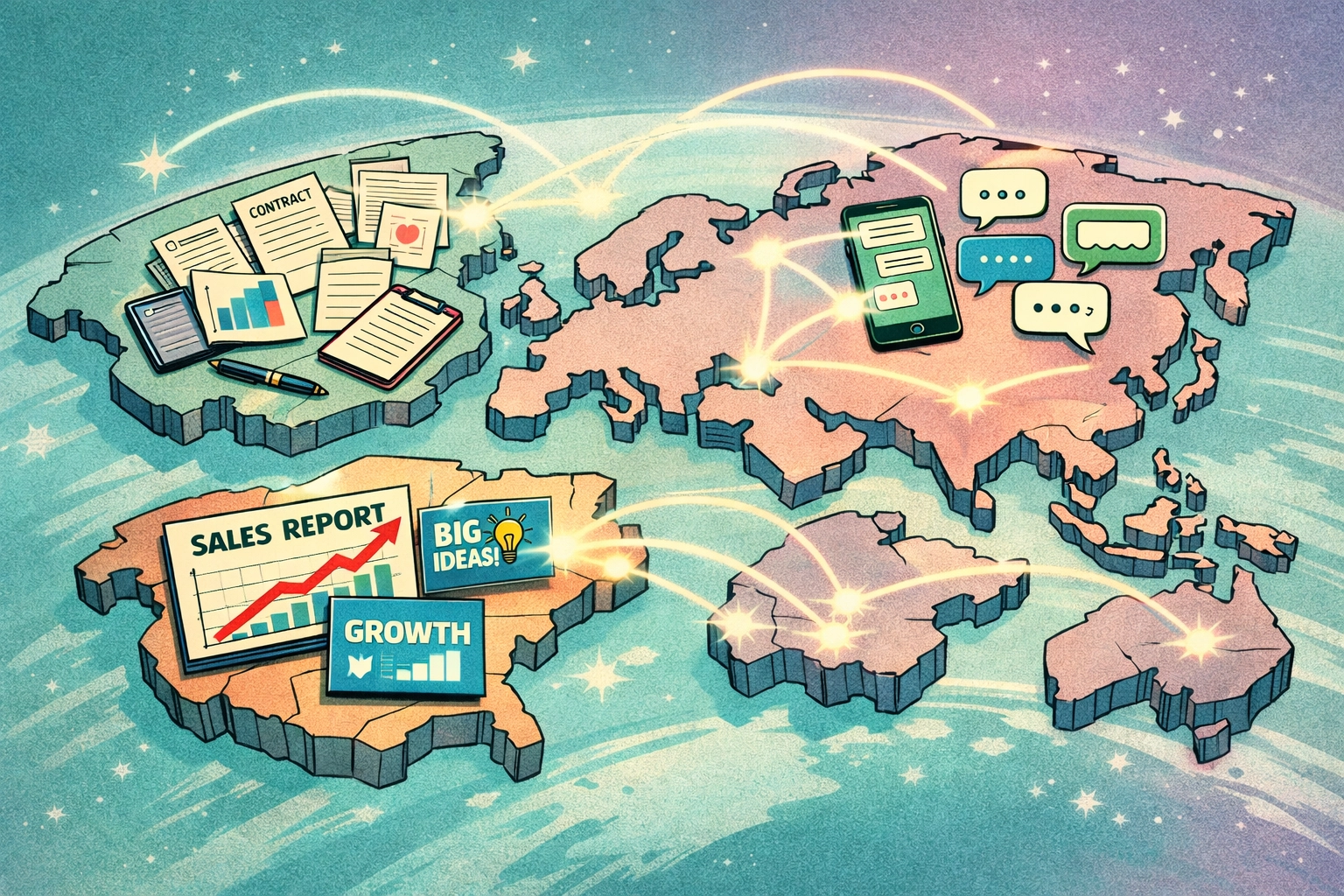
Let me guess: your European team is running one playbook, your APAC reps are doing their own thing, and your North American marketing is pumping out content that gets copy-pasted into Google Translate at 11 PM before a regional launch.
Sound familiar?
Here’s the brutal truth: most enterprise GTM stacks in 2026 are barely held together with duct tape when it comes to multi-region, multi-language execution. You’re not just translating words. You’re trying to maintain ICP consistency, cultural relevance, and data integrity across time zones, languages, and completely different buying behaviors.
And when your stack breaks under that pressure? Revenue leaks everywhere.
Why “Translation” Isn’t a Strategy Anymore
Back in 2023, most companies thought going global meant hiring a translation agency and swapping out English for German or Japanese. Maybe you’d adjust a few currency symbols, change some date formats, and call it localized.
That doesn’t cut it in 2026.
Your ICP in San Francisco isn’t the same as your ICP in Singapore: even if they have the same job title, company size, and tech stack. The buying committee structure is different. The decision-making timeline is different. The content formats they trust are different.
Here’s what actually happens when you run a “translate and hope” strategy:
- Your messaging feels flat and disconnected in regional markets
- Sales reps create their own collateral because HQ materials don’t resonate
- Marketing automation campaigns bomb because the nurture cadence is wrong for that culture
- Customer success teams can’t use your playbooks because the support expectations are completely different
You end up with siloed regional operations, inconsistent data, and no unified view of what’s actually working.
What a 2026 Multi-Region GTM Stack Actually Looks Like
The difference between a Frankenstack and a Multi-Region ICP Engine comes down to one thing: unified data flow with localized intelligence.
You need a GTM stack that can:
- Maintain a single source of truth for your global ICP while allowing regional flexibility
- Orchestrate content and campaigns across regions without creating data chaos
- Use AI to adapt messaging, tone, and timing based on cultural context: not just language
- Keep Sales, Marketing, and Customer Success aligned across every region in real-time
Let’s break down what that actually means in practice.

The Architecture: How Enterprise RevOps Builds for Multi-Region Scale
1. Centralized Data Hub with Regional Context Layers
Your CRM (whether it’s Salesforce, HubSpot, or something else) needs to be the single source of truth: but with smart regional context baked in.
This means:
- One global account object that tracks the full customer lifecycle
- Regional fields that capture local buying signals (e.g., preferred communication channels, fiscal year timing, compliance requirements)
- Dynamic segmentation that adjusts ICP scoring based on regional market maturity
Here’s where most teams screw up: they either centralize everything and lose regional nuance, or they let each region build its own instance and lose global visibility.
The solution? A hub-and-spoke data model. One central CRM instance with regional workspaces that inherit global data structure but can add localized fields and workflows.
2. AI-Powered Cultural Intelligence, Not Just Translation
In 2026, your AI-driven revenue operations platform isn’t just translating copy: it’s adapting your entire GTM motion to regional preferences.
Think about it:
- In Germany, your enterprise buyers expect detailed technical whitepapers before any sales conversation
- In the US, they want a quick demo and social proof
- In Japan, relationship-building and introductions matter more than your fancy ROI calculator
AI agents in your stack should be able to:
- Rewrite email sequences to match regional communication styles (formal vs. casual, direct vs. consultative)
- Adjust content recommendations based on what actually converts in each market
- Recommend optimal outreach timing based on regional work patterns and holidays
- Flag cultural sensitivities before campaigns go live
This isn’t sci-fi. Tools like native AI features in HubSpot and Salesforce Einstein are already doing versions of this: but you need to orchestrate them properly across your entire GTM stack.
3. Unified Campaign Orchestration Across Marketing, Sales, and CS
Your best-performing campaign in North America might completely flop in EMEA. Not because the message is wrong, but because the execution and channel mix are off.
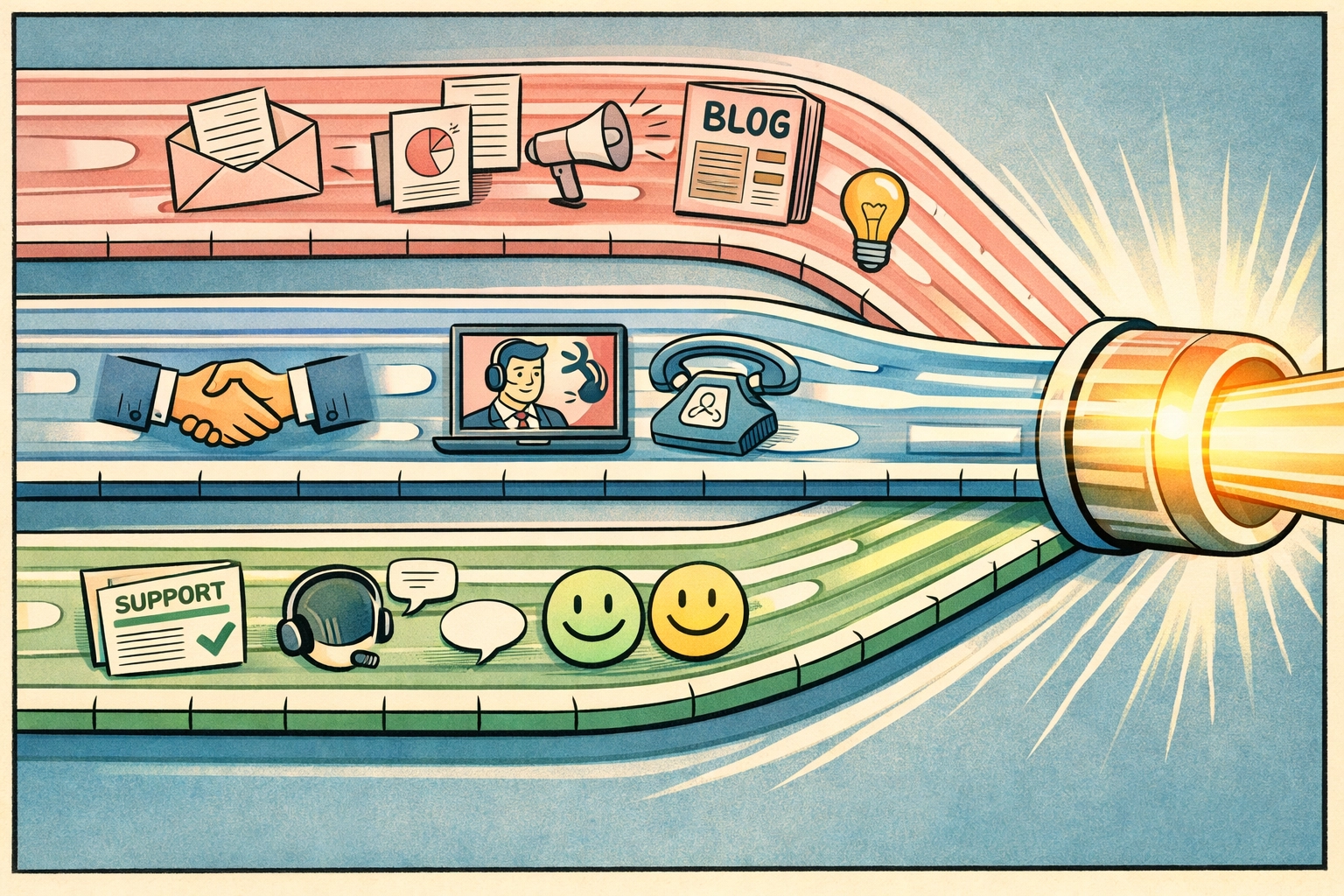
A true Multi-Region ICP Engine coordinates campaigns across all three GTM functions:
Marketing: Creates core campaign assets that regional teams can adapt (not just translate). AI tools suggest modifications based on historical regional performance data.
Sales: Gets real-time alerts when prospects engage with localized content, with suggested talk tracks that match regional buying behaviors.
Customer Success: Uses the same account intelligence to deliver support in culturally appropriate ways (some regions prefer chat, others want phone support, some expect community-driven solutions).
The key is shared workflows and data: not separate systems duct-taped together with Zapier.
4. Real-Time Localization at the Edge, Not the HQ Bottleneck
Here’s the thing: if every piece of regional content needs to get approved by global marketing before it goes live, your velocity dies.
Instead, build localization guardrails powered by AI:
- Define global brand standards and messaging frameworks
- Use AI to ensure regional adaptations stay on-brand and ICP-aligned
- Let regional teams move fast within those guardrails
- Surface regional innovations back to HQ so winning tactics can spread
Think of it like a franchise model. Corporate sets the recipe, but regional managers can adapt to local tastes: as long as quality standards are maintained.
5. Selecting an Enterprise CMS: The “Heart” of the Multi-Region ICP Engine (2026 Edition)
If you’re treating your CMS like “the place where marketing pages live,” you’re going to keep reliving the same multi-region pain: content drift, weird regional one-offs, and teams quietly building shadow sites because they can’t ship fast enough.
In 2026, your CMS is the heart of the Multi-Region ICP Engine because it’s where three things collide:
- ICP consistency: the canonical version of messaging, proof points, and positioning
- Regional reality: language, compliance, cultural nuance, and local conversion patterns
- Revenue connectivity: content performance and buyer intent flowing into your GTM brain (Salesforce/HubSpot)
When the CMS is designed for that job, localization speeds up, personalization gets smarter, and your CRM stops being blind to what prospects actually consumed.
What to look for (the non-negotiables)
- Headless / composable architecture (API-first, not page-first)
You want content structured as reusable building blocks (industry page modules, value props, proof points, FAQs) that can be delivered to any frontend: website, in-app, docs, partner portals, region-specific landing pages, etc.
This is how you avoid “47 slightly different versions of the same page” across regions and channels. If you want a solid explainer on why enterprises keep moving this direction, WordPress VIP’s headless CMS guide is a good baseline reference: https://wpvip.com/resource/headless-cms-guide - AI-native localization workflows (translation is a workflow, not a copy/paste step)
You’re looking for a CMS that treats localization like a first-class system:
- Translation memory / glossary support (so terms like product names, features, and compliance language don’t drift)
- Role-based approvals (legal + brand + regional marketing) without spreadsheet chaos
- Side-by-side previewing of locales before publishing
- Hooks for AI assist with human review so you don’t create brand risk at scale
If localization lives outside the CMS in a chain of docs, emails, and “final_final_v7” files, you’ll always have manual bottlenecks and inconsistent rollout timing.
- Deep API connectivity with your CRM (Salesforce/HubSpot) and the rest of the GTM stack
This is the big one: content should be measurable and actionable in the same systems your GTM teams live in.
At minimum, you want:
- Clean APIs (REST/GraphQL), webhooks, and event streams so content engagement can map to contacts/accounts
- Native or well-supported integration patterns with Salesforce/HubSpot (even if done through middleware)
- The ability to pass context both ways: CRM segments → site personalization, and content activity → CRM fields / timelines
Salesforce has been loud about “connectivity” becoming the unlock for modern AI + enterprise systems (and how siloed apps block that). Their 2026 connectivity report announcement is worth skimming for the macro trend: https://www.salesforce.com/news/stories/connectivity-report-announcement-2026/
What to avoid (it’ll quietly break your multi-region motion)
- Monolithic legacy CMS platforms that are page-centric and plugin-dependent
If every new region means cloning sites, duplicating templates, and reinventing components, you’re creating content silos by design. The business symptom is predictable: regions ship slower, and eventually they go rogue. - “Translation as an afterthought” architectures
If the system can’t support structured localization workflows, you end up with manual handoffs that become a launch blocker (and your regional teams stop trusting HQ timelines). - Closed ecosystems with shallow integrations
If your CMS can’t reliably push/pull data with Salesforce/HubSpot (or requires heroic custom work for basic connectivity), your ICP Engine loses feedback loops. You’ll be “global” in branding but blind in RevOps.
The Tools That Make It Work (and the Ones That Don’t)
Let’s talk tech stack for a second.
What you need:
- A modern CRM (Salesforce, HubSpot) that can handle multi-currency, multi-language, and complex regional reporting
- AI orchestration tools that sit on top of your stack and coordinate cross-functional workflows
- Marketing automation that supports dynamic content for different languages and regions (without creating 47 separate campaign clones)
- Revenue intelligence platforms that can unify data from regional tools into one dashboard
What you don’t need:
- Separate CRM instances for each region (data nightmare)
- Manual translation workflows that create bottlenecks
- Disconnected regional marketing tools that can’t share data
- “Best-of-breed” tools that don’t integrate with your core stack
The goal is fewer tools with deeper integrations, not more tools creating more chaos.

How to Build This Without Ripping Out Your Entire Stack
Look, I get it. You’re not going to rebuild your entire GTM stack from scratch in Q2.
Here’s how to start:
Phase 1: Audit Your Data Structure
Map out how regional data flows (or doesn’t flow) across your CRM, marketing automation, and other tools. Identify the biggest leaks.
Phase 2: Implement Unified ICP Definitions
Create a global ICP framework with regional modifiers. Make sure every team is scoring accounts consistently.
Phase 3: Connect Regional Tools to Central Hub
Use integration platforms or native connectors to funnel regional data back to your central CRM. No more data islands.
Phase 4: Layer in AI for Localization
Start with one use case: like AI-adapted email sequences: and expand from there as you see results.
Phase 5: Build Cross-Functional Workflows
Create shared playbooks for how Marketing, Sales, and CS hand off accounts in each region. Document it, automate it, measure it.
The Bottom Line: Global Scale Requires Unified Intelligence
Building a Multi-Region ICP Engine isn’t about buying more software. It’s about architecting a data-first GTM operation that treats localization as a first-class citizen, not an afterthought.
When you get this right, your regional teams move faster, your ICP consistency improves, and your revenue intelligence actually gives you a global view: not just a patchwork of regional dashboards.
If your current stack feels like it’s held together with hope and Slack messages, it’s time to rethink the architecture. Because in 2026, the companies winning in multi-region markets aren’t the ones with the biggest budgets: they’re the ones with the smartest data flow.
Want to see how AI-driven revenue operations can help you build a GTM stack that actually scales globally? Let’s talk.

