
From Raw Usage to Personalized Narratives: AI-Driven Campaigns That Actually Work
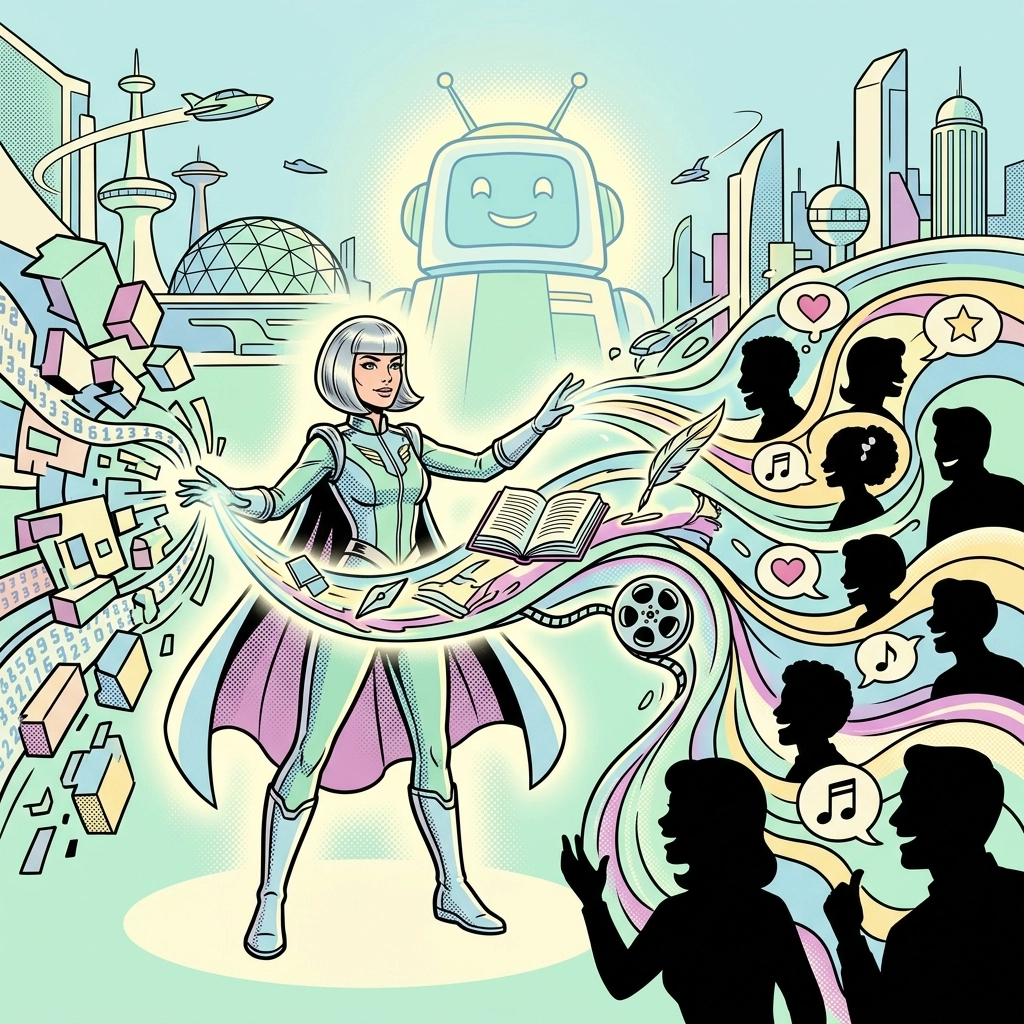
The history of marketing is largely a history of approximation. For decades, the industry operated on the principle of the “broadest possible reach,” hoping that a single, compelling narrative would resonate with enough people to justify the spend. Even as digital tools introduced segmentation, the core methodology remained static: grouping humans into cohorts based on static attributes like job title or industry. While this was an improvement over the television era, it failed to capture the most valuable signal in the B2B SaaS world: the actual behavior of the user within the product.
Historical analysis reveals that the most effective persuasion occurs not when a message is loud, but when it is relevant. In the modern enterprise GTM AI strategy, the goal is no longer to guess what a prospect needs. The goal is to observe what they are doing and provide the narrative that helps them achieve their next objective. This shift: from raw usage data to personalized narratives: represents the next great leap in marketing productivity.
The Disconnect Between Product and Promotion
In most contemporary B2B organizations, a significant wall exists between product engineering and the marketing team. Valuable telemetry: how often a user interacts with a specific feature, where they encounter friction, or which workflows they ignore: remains trapped in data warehouses or product analytics tools.
Marketing teams, meanwhile, are left to run campaigns based on “top-of-funnel” triggers or arbitrary time-based sequences. The result is a generic experience. A user who has spent three hours mastering an advanced feature receives a “Welcome to the Platform” email. Conversely, a struggling trial user is hit with a “Request a Demo” CTA before they have even seen the dashboard.
This disconnect is more than a missed opportunity; it is a production bottleneck. It forces marketing teams to spend hours manually exporting CSVs, mapping fields, and attempting to build complex branching logic in legacy automation platforms. This manual labor is the antithesis of scaling. True accelerating growth requires a system where the data itself generates the narrative.
The Architecture of the Narrative Engine
Building an AI-driven buyer journey requires a fundamental shift in how we think about marketing technology. Rather than adding more third-party SaaS tools to an already bloated stack, visionary leaders are turning to custom AI apps. These apps serve as a “Data Bridge,” connecting raw usage signals directly to generative creative engines.
The process begins with the ingestion of event-stream data. When a user performs an action: or fails to perform one: that signal is routed to a custom AI agent. Unlike traditional automation, which follows a rigid “If X, then Y” script, the AI agent interprets the context of the action. It asks: What does this behavior indicate about the user’s level of maturity, their specific pain point, or their likelihood to convert?
Once the context is established, the AI app triggers the creative phase. It doesn’t just pull a pre-written template from a database. It synthesizes a narrative. If a user has been exploring the “Reporting API,” the AI might generate a personalized guide titled “3 Ways to Automate Your Monthly Reports via API,” referencing the specific endpoints the user has already touched.

From Signals to Stories: Real-World Applications
The impact of this approach is not theoretical. Observations of market leaders show that when campaigns transition from generic to behaviorally synthesized, engagement rates undergo a paradigm shift. Consider the following applications of this technology:
1. The Proactive “Success” Narrative
Traditional churn prevention is reactive. It triggers when a user stops logging in. An AI-driven narrative engine, however, identifies a “success bottleneck” before the user even realizes it. If data shows a user is spending excessive time on a configuration screen without completing it, a custom AI app can generate a personalized outreach from a “virtual success manager,” providing a Loom video script or a step-by-step guide tailored to the specific roadblock detected in the logs.
2. High-Velocity Personalization at Scale
Large consumer brands like Airbnb and Coca-Cola have already demonstrated the power of AI-driven personalization. Airbnb, for instance, uses AI to analyze booking history and preferences to increase email click-through rates by 35% [Source: McKinsey Analysis]. In the B2B SaaS world, this translates to the unfair advantage. By piping product usage data into custom apps, a marketing team can send 10,000 unique, hyper-relevant emails that each feel as though they were written by a human who spent an hour researching the recipient’s specific usage patterns.
3. Dynamic Creative Optimization
AI-driven campaigns do not stop at text. They extend into the visual and structural components of the buyer journey. Custom apps can dynamically adjust landing page copy, testimonials, and even pricing tiers based on the “story” the data is telling. This creates a cohesive, AI-driven revenue operation where the buyer never feels like they are being marketed to, but rather supported in their journey.
Overcoming the Production Bottleneck
The primary reason most marketing teams have not adopted this level of personalization is not a lack of desire, but a lack of production capacity. Writing 500 variations of an ad or 50 different nurture tracks is a human impossibility.
Custom AI apps vaporize this bottleneck. They move the “production” of marketing collateral from a human-centric workflow to an architectural one. At FusedLabs, we have observed that the most successful GTM strategies are those that treat marketing as a product. The “product” is the narrative, and the “factory” is the AI engine.
By automating the synthesis of insights, marketing teams are freed from the “grunt work” of tagging assets, routing leads, and manual attribution. Instead, they shift their focus to higher-order tasks: defining the brand voice, refining the AI’s logic, and identifying new data signals to incorporate into the engine. This is the essence of beyond the hype.
The Inevitability of the AI-Driven Journey
As we look toward the future of B2B SaaS, the question is no longer if AI will drive the buyer journey, but how deeply integrated it will be. The companies that continue to rely on manual, time-based campaigns will find themselves increasingly ignored by a buyer base that has been conditioned to expect relevance.
The transition from raw usage to personalized narratives is not merely a technical upgrade; it is a competitive necessity. It requires a commitment to data integrity and a willingness to move beyond the limitations of standard SaaS platforms. It requires an enterprise GTM AI strategy that prioritizes custom architecture over generic tools.

Historical analysis reveals that every major shift in marketing has been driven by a change in data availability. The shift from print to digital was about speed. The shift from digital to AI is about relevance. When your marketing narratives are built on the foundation of real-time usage data, you are no longer shouting into the void. You are having a conversation with every single customer at once.
Towards a Unified GTM Stack
The ultimate goal of building custom AI apps for marketing productivity is to create a seamless flow from the product to the revenue engine. When marketing can react to product data with the same speed and precision that a developer reacts to a bug report, the entire organization moves faster.
For those ready to explore this new frontier, the path forward is clear: identify your highest-value usage signals, bridge the gap with custom AI, and let the data tell the story. The era of the generic campaign is over. The era of the personalized narrative has begun.
Are you prepared to turn your product data into your most powerful marketing asset? Explore our insights or connect with us to discuss how custom AI apps can transform your GTM operations.

